






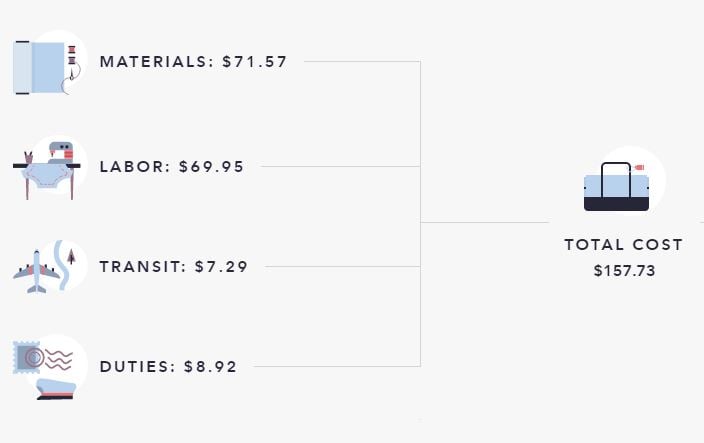
“If you're buying from luxury brands at expensive prices, you automatically assume that it’s of high quality. It's usually not.” After witnessing low-cost production processes first hand during a visit to a factory in Asia during business school, Oxford MBA alumnus Scott Gabrielson connected the dots. “[W]e saw cramped workers, earning US$6/day, gluing and sewing luxury duffle bags and backpacks. One of the bags, which the brand claimed to produce in Italy, cost under US$100 to make. This bag sold for over US$1,200 just down the road.”
High mark-ups aren’t an anomaly in the luxury fashion industry, where more than three quarters of purchases come from a handful companies, according to Gabrielson. He believes this encourages luxury fashion brands to monopolize the market and inflate prices. In addition, those who desire to cut costs at the production level to make room for larger marketing budgets often succeed only in bringing lower quality and less affordable goods to market. “When you buy fashion goods you often buy a brand. The problem is that these luxury fashion brands keep the brand but change the way they make things, and it has never been in the interests of consumers,” Gabrielson explains. Yet, in a competitive industry, forecasted to be worth over 2 trillion dollars by 2025, finding and driving customer loyalty is key to success.
The 2013 Rana Plaza building collapse in Bangladesh, the deadliest garment-factory accident in history which killed 1,130, inspired Gabrielson to focus on disrupting the fashion industry, and led him to pursue an MBA at Oxford’s Saïd Business School the following year. His MBA studies culminated in his founding of online fashion startup, Oliver Cabell, earlier this year, which aims to shake things up in a subtle, but significant, way.








Get closer to your dream programme
Your consent preferences have been set.
Time to start exploring.
Your account has been removed.
You can still browse the site or sign up again once you have parental consent.
Get closer to your dream programme